
Northwind Theological Seminary
SAVE THE DATE - MARCH 2, 2027 - NTS GATHERING - LECTURES & GRADUATION - ORLANDO, FL


Wesleyan Studies
Wesleyan studies is an academic and practical field focused on the theology, history, and practice of 18th-century reformers John and Charles Wesley.
It covers Wesleyan-Arminian theology, scriptural authority, practical holiness, grace, and Methodist history.

The Wesleyan Studies doctoral program at Northwind digs deep into the historical and theological foundations of the founder of the Methodist Movement and then expands the Wesleyan tradition in light of the lived experience of the people of God in multiple contexts.
Northwind's focus on metamodernity explores the intersection of 18th-century Methodist theological frameworks—specifically the Wesleyan Quadrilateral (scripture, tradition, reason, experience)—with the 21st-century cultural, philosophical, and theological shift beyond postmodernism. This field seeks to apply Wesleyan practical theology to metamodernity characterized by an oscillation between hope and doubt and a renewed search for meaning.
Key aspects of this emerging field include:
-
Biblical Hermeneutics: utilizing a revised Wesleyan Quadrilateral to foster a hospitable homiletic culture that is both faithful to tradition and open to diverse, contemporary perspectives.
-
Practical Theology: addressing the limitations of both modernity’s embrace and postmodernism’s rejection of meta-narratives and instead prioritizing the Wesleyan emphasis on uncontrolling love and radical grace to navigate the complexities of the current era.
-
Critique of Postmodernism: Wesleyan-Holiness theology is moving beyond the family feud of 20th-century debates to confront the nihilism and collapse of scientific realism that followed the postmodern era.
-
Oscillation: Wesley’s tendency toward a "conjunctive" theology—balancing opposing ideas—aligns with the metamodern tendency to oscillate between modern enthusiasm and postmodern irony.
Our theological roots are in the Wesleyan Methodist tradition, but our branches and leaves serve many denominations and faith traditions. Having learned lessons from the modern “either/or” and postmodern “both/and” eras of Christian tradition, we now engage the metamodern "oscillation" era and ethos of the NextChurch in light of a new Re-formation and “New Thing” God is doing in the world.
TUITION & FEES APPLY TODAY REQUEST INFORMATION
Doctor of Theology & Ministry
36 Credits
A certified degree delivered
in an accelerated format.
Course of Study
Year One:
Starting Well Experience
Foundations of Wesleyan Theology
Daniel Pratt-Morris-Chapman, Ph.D.
Contextualization of Wesleyan Theology
Michael J. Christensen, Ph.D.
Readings I
Student Selected Faculty Mentor
Year Two:
Readings II
Student Selected Faculty Mentor
Readings III
Student Selected Faculty Mentor
Dissertation & Defense
Continuing Well Experience
Students who graduate will receive a
CPCA Commission-certified degree from NTS.
— Name, Title

Doctor of Theology
42 Credits
An accredited degree delivered
in an accelerated format.
Course of Study
Year One:
Starting Well Experience
Foundations of Wesleyan Theology
Daniel Pratt-Morris-Chapman, Ph.D.
Contextualization of Wesleyan Theology
Michael J. Christensen, Ph.D.
Readings I
Student Selected Faculty Mentor
Year Two:
Readings II
Student Selected Faculty Mentor
Readings III
Student Selected Faculty Mentor
Comprehensive Exams
Dissertation & Defense
Continuing Well Experience
NTS Courses have been mapped onto Kairos University degree requirements.
Students who graduate will receive an ATS accredited degree from Kairos University.
Students in this degree apply to NTS and are officially enrolled and admitted to both institutions.
Meet The Faculty

Michael J. Christensen
Ph.D.
Progressive
Wesleyan Theology
John Wesley Fellows

Daniel Pratt-Morris-Chapman
Ph.D.
World Methodism

Carl Savage
DMin, Ph.D.
Biblical Studies
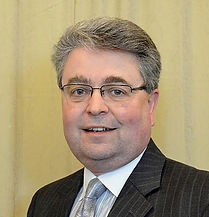
Robert J. Duncan, Jr.
DMin, ThD
Social Justice
&
Multicultural Communities
Students select one of our Faculty Mentors to guide them through their research
Publish Your Doctoral Project
During the Project Experience, students will have the options to complete a Manuscript as their Dissertation.
During the Defense, students defend their Manuscript to their fellow students and visiting faculty.
Following a successful Defense, students will have the opportunity to publish their peer-reviewed Manuscripts in Northwind seminary Press.
Program Outcomes
With a focus on rich theological reflection on ministry practice, the Doctor of Theology will help you develop and deepen your knowledge of theological content, be more fully formed in Christian character, and generate new understandings of the craft of ministry. Through the program, you will develop and demonstrate proficiency in its eight outcomes: Starting Well, Specialized Inquiry: Literature and History, Specialized Inquiry: Concepts and Models, Specialized Inquiry: Practices and Methods, Integration: Macro Context, Integration: Micro Context, Generative Learning, and Continuing Well.
Dissertation
As part of the Doctor of Theology program, you will be invited to generate for dissemination high-level scholarly research within a specialized theological field of inquiry toward the improvement of ministry praxis. You will work alongside a mentor team crafted around your specialized field of inquiry, and your entire learning experience may be individualized and contextualized as much as possible toward exploring your degree concentration and research focus.
Customized Learning Experiences
Learning experiences in Kairos are built around an invitation for students to explore some aspect of their vocation, Christian thought and practice, or the human experience. As a Doctor of Theology student, you will be able to engage in individualized and guided learning experiences that encourage deep theological reflection on ministry practice within your context and tradition.